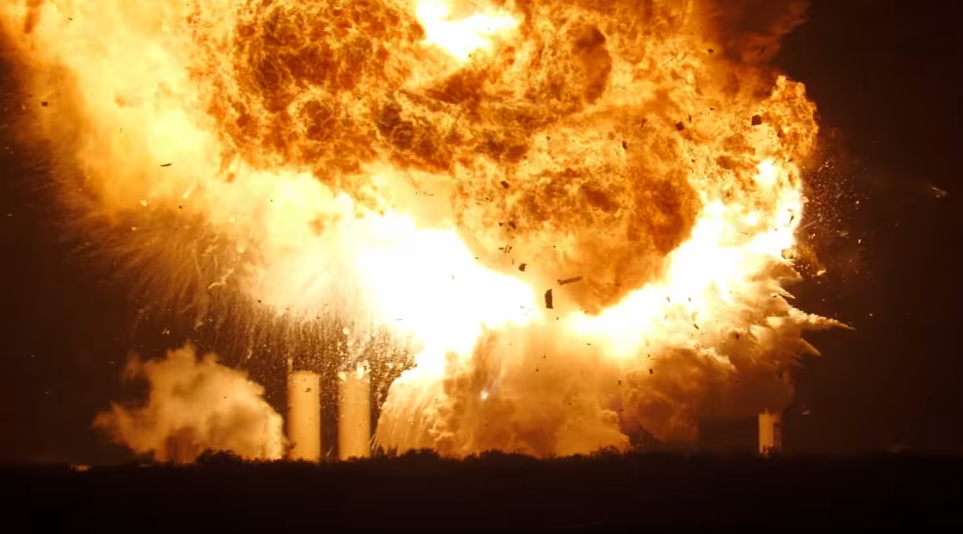
Over the past five years, SpaceX’s Starship program has repeatedly experienced catastrophic failures; explosions, structural issues, and engine underperformance that have severely limited payload capacity and mission success. Unlike traditional iterative development, where failures gradually decrease, Starship’s pattern of explosive failures suggests deeper, fundamental design and engineering problems.
The “move fast and break things” mentality, borrowed from Silicon Valley software culture, does not suit rocket science, where safety, reliability, and mission-critical functionality are non-negotiable. The core function of a rocket, to safely and efficiently propel payloads into space, has repeatedly fallen short in Starship’s case.
SpaceX’s development is highly focused (as it of course needs to be), and as can happen in many organizations, this environment may lead to a concentration of ideas within the team that limits the inclusion of alternative viewpoints. This can unintentionally result in reinforcing existing approaches and affecting the pace of new breakthroughs.
The Solution: OpenSpaceX.com
To break free from this cycle, SpaceX should embrace full transparency by creating an open platform, OpenSpaceX.com, where engineers, experts, and enthusiasts worldwide can access technical data, share insights, and collaboratively brainstorm solutions. This would:
- Break the internal echo chamber and invite fresh, diverse perspectives
- Build public trust through honest disclosure of challenges and progress
- Accelerate innovation by harnessing global expertise beyond company walls
Rocket science demands rigor, accountability, and collaboration. Opening SpaceX’s development to the world could turn current failures into a collective opportunity for breakthrough success, or at least prevent costly, dangerous repetition of past mistakes.
Explosions Are Not an Acceptable Baseline of Failure. Repeated explosions and catastrophic failures cannot be normalized as “part of the process.” For a spacecraft designed to carry humans and expensive payloads, this level of destruction points to deep-rooted technical flaws that simple iteration won’t fix. Here are detailed technical reasons why blowing things up repeatedly will not solve Starship’s fundamental issues:
- Engine Combustion Instability: The Raptor engines use a full-flow staged combustion cycle that is extremely complex. Instabilities in combustion lead to vibrations and pressure spikes that cause engine damage and failure. Repeated explosions indicate unresolved fluid dynamics and combustion chamber design flaws.
- Thermal Management Challenges: Starship’s stainless steel structure must withstand extreme heat during ascent and reentry. Failure to properly manage thermal stresses causes warping, cracks, and fuel leaks. Explosive failures suggest inadequate thermal shielding or cooling designs that need fundamental rethinking.
- Structural Resonance and Vibrations: The vehicle experiences significant vibration modes during flight, which cause structural fatigue and can lead to catastrophic ruptures. Iterative tests that end in explosions don’t address the root cause of resonance frequencies or tank wall thickness optimizations.
- Tank Pressurization and Propellant Management: Starship’s large cryogenic tanks must maintain pressure while avoiding sloshing or cavitation in turbopumps. Repeated failures hint at poor propellant management or seals that lead to leaks or rupture under dynamic flight conditions.
- Material Fatigue and Thermal Cycling: Rapid reusability demands materials that survive extreme temperature swings and mechanical loads. Stainless steel alloys used may suffer from fatigue faster than expected, especially under vibration and thermal cycling, compromising structural integrity.
- Engine Thrust-to-Weight Ratio Issues: Raptors have struggled to consistently meet intended thrust levels, limiting payload capacity. Blowing up engines repeatedly doesn’t solve the underlying turbopump or combustion efficiency problems causing underperformance.
- Complex Turbopump Failures: The turbopumps operate at incredibly high RPMs and pressures; small design flaws cause catastrophic bearing or seal failures. These are engineering problems requiring detailed redesign, not just iteration.
- Fuel Line and Plumbing Vulnerabilities: Fuel leaks from complex plumbing cause explosions. Iterative testing risks repeating the same failures if design weaknesses or manufacturing inconsistencies aren’t fully addressed.
- Insufficient Quality Control in Manufacturing: Rapid prototype production can cause inconsistencies in welds, fittings, or materials, leading to weak points that explode under flight stresses.
- Thermodynamic Inefficiencies: Inefficient heat exchange and fuel cooling systems exacerbate thermal stress and reduce engine efficiency.
- Insufficient Redundancies and Safety Margins: The aggressive design pushes components to their limits with minimal safety buffers, increasing failure risk during unexpected flight conditions.
- Unproven Rapid Reusability Design: True rapid turnaround requires engines and structures designed for minimal refurbishment, which Starship has yet to demonstrate.
- Propellant Boil-Off and Handling Issues: Methane and oxygen cryogenics require precise thermal control to avoid pressure build-up or loss, a challenging area still under development.
- Aerodynamic Stability Problems: Starship’s large surface area and control surfaces create complex airflow patterns; failures in control during ascent or descent can cause structural overload.
- Integration Complexity: Integrating engines, tanks, avionics, and heat shields in a new design simultaneously increases the risk of unanticipated failure modes.
- Insufficient Ground Testing Before Flight: Many components fly without exhaustive ground qualification, leading to in-flight surprises that cause failures.
- Lack of Redundant Engine Shutdown Systems: Failures in engine control systems during flight can escalate quickly without backup systems.
- Data Collection and Analysis Shortcomings: Without deep, transparent data sharing and rigorous failure analysis, root causes remain obscured.
- Thermal Expansion Mismatch: Stainless steel and other components expand differently with temperature, causing stress concentrations that lead to leaks or cracks.
- Scaling Challenges: Starship’s unprecedented size compounds all these issues, making small flaws exponentially more dangerous.
In short, these problems require thorough engineering redesign, rigorous testing, and transparent peer review, not just repeating explosive tests hoping for incremental improvement. Without addressing these root causes, continuing with “blow it up to fix it” risks catastrophic failures that could cost lives, money, and the future of deep space exploration.